AI-Generated Ads and the EU AI Act: What Advertisers Must Disclose Before August 2, 2026
The EU AI Act's AI-generated content rules take effect August 2, 2026. Here is what advertisers must disclose and how to label AI ad creative correctly.
AI-Generated Ads and the EU AI Act: What Advertisers Must Disclose Before August 2, 2026
If you run ads in the European Union and you use AI to make the creative, the EU AI Act now requires you to be transparent about it. The transparency rules in Article 50 of the AI Act apply from August 2, 2026. In short: people must be told when they are dealing with an AI system, and certain AI-generated or manipulated content has to be disclosed as artificial. For advertisers, that means some AI-built images, video, and audio will need a clear label. This guide explains who is responsible, what actually counts, and the practical steps to take before the deadline.
What the EU AI Act requires from August 2, 2026
Article 50 sets transparency obligations that apply to any AI system used in four specific situations, not just systems labeled high-risk. That scope is the part people miss. The four situations are:
- AI systems that interact directly with people, such as chatbots, virtual assistants, and automated phone systems. The provider must build them so users know they are talking to an AI, unless that is obvious from the circumstances.
- Generative AI systems that produce synthetic audio, image, video, or text. The provider must mark the outputs in a machine-readable format so they can be detected as artificially generated or manipulated.
- Emotion recognition and biometric categorization systems. Deployers must tell people the system is operating.
- Deepfakes and AI-generated or manipulated image, audio, or video content. The deployer must disclose that the content is artificially generated or manipulated.
The information has to be given in a clear and distinguishable way, no later than the first time a person interacts with or is exposed to the content. The fines for breaking these rules reach up to 15 million euros, or up to 3% of worldwide annual turnover, whichever is higher.
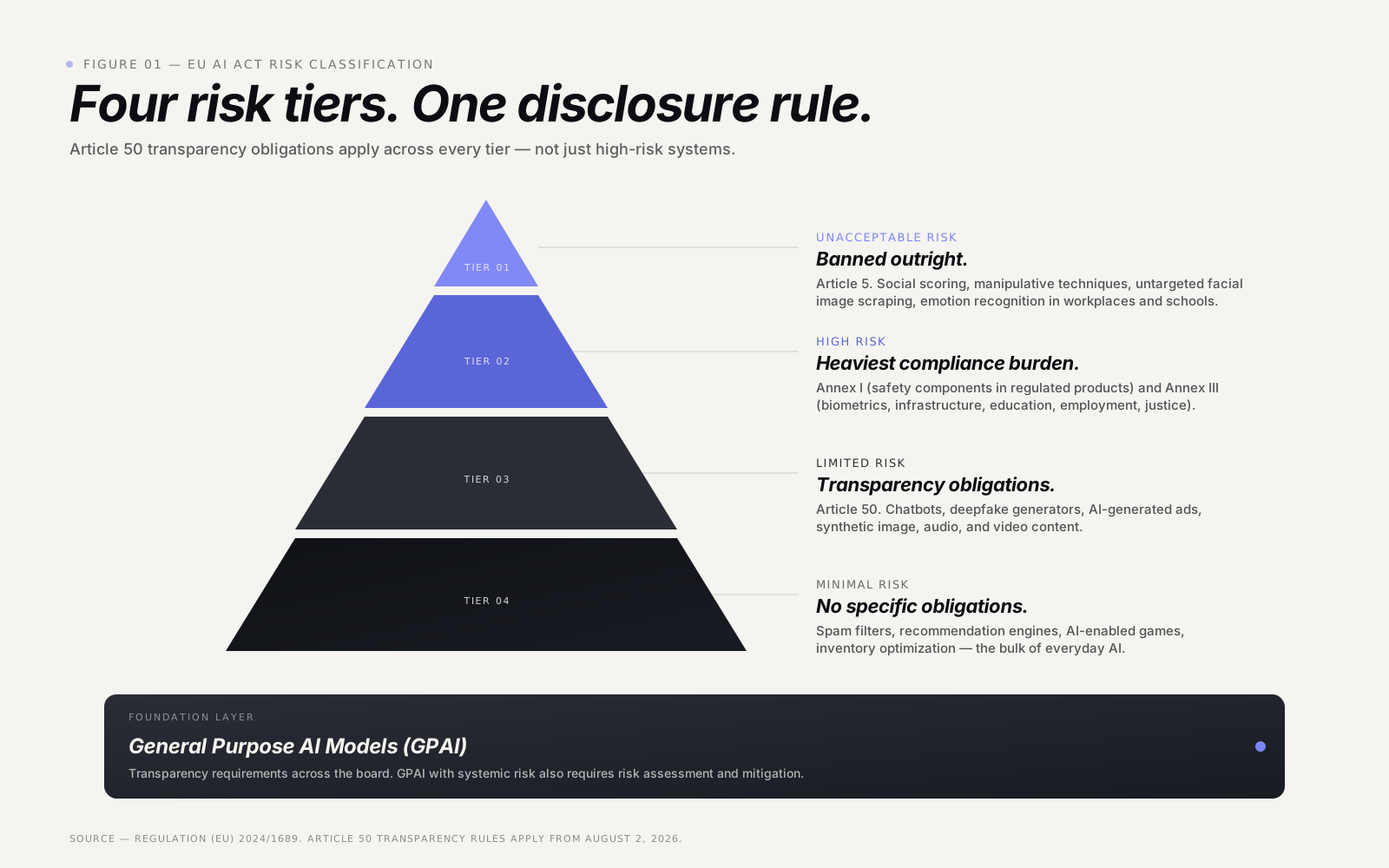
*The AI Act sorts every system into one of four risk tiers, with general-purpose models forming the foundation. Article 50 transparency obligations sit at the Limited Risk tier — but they reach across the pyramid whenever AI is used to interact with people or generate synthetic content.*
Provider versus deployer, and why it matters for advertisers
The Act splits responsibility between providers and deployers, and that split decides what is on you. A provider is the company that builds and supplies the AI system, for example the tool that generates an image or a voice. A deployer is the business that uses that tool under its own authority, which is where most advertisers and agencies sit.
The machine-readable marking of generative output, meaning the watermark or metadata baked into a file, is the provider's job. Your obligation as a deployer is the disclosure side. If you use an AI system to create or manipulate image, audio, or video that constitutes a deepfake, you have to disclose that it is artificial. There is a parallel rule for AI-generated text published to inform the public on matters of public interest, with an exception when a human reviews the text and someone holds editorial responsibility for it.
The practical takeaway: you cannot assume your AI tool covers your duty. The tool handles marking. You handle disclosure.
What actually counts as a deepfake here
This is where advertisers get nervous, so it helps to be precise. The deepfake rule targets content that resembles real people, objects, places, or events and would falsely appear authentic. A fully synthetic spokesperson built to look like a real human, an AI clone of a real voice, or a manipulated video of a real location can fall in scope. Routine creative help is treated more lightly. The European Commission's draft guidance points to a lighter touch where AI only assists or makes minor edits that do not change the meaning of the content.
The line is not always obvious. A stylized, clearly artificial illustration is lower risk than a photorealistic image of a person who looks real but does not exist. When the call is close, the official guidance is the place to check rather than guessing, and disclosure is the safer default for anything realistic.
Does this apply to US advertisers
Often, yes. The AI Act reaches any AI system whose output is used in the EU, regardless of where the company sits. If a US business runs campaigns that serve people in the EU, or uses AI content aimed at an EU audience, the transparency rules can apply. If you only advertise to a US audience and never touch the EU market, Article 50 is not your obligation.
Most growing brands are somewhere in between. They start US-only and expand, or they sell products that ship internationally. For that reason the safe move is to build AI disclosure into your process now, while it is a small change, rather than retrofit it across dozens of live campaigns later.
What Google just shipped to help
On June 25, 2026, Google released version 24.2 of the Google Ads API, and it added two structures aimed squarely at this deadline: SyntheticContentInfo and SyntheticContentAttestation. They live on both the Asset and the Ad, and they let you label AI-generated creative programmatically.
Here is what the fields do:
- Both the advertiser and Google's own systems can attest whether an asset or ad is AI-generated.
- The attestation records how the content was made, either fully automatically or with advertiser review.
- Google states plainly in its developer documentation that if you are preparing for the EU AI Act taking effect on August 2, 2026, this is the feature to look at.
There is a timing wrinkle worth flagging. Google introduced the interface early for API versions 22 and up so teams can plan ahead, but the advertiser attestation fields stay immutable, meaning read only, in those versions. Full write access arrives in v25. If you manage creative through the API or a third-party platform, this is a conversation to have with your developer or vendor now, not in August.
Google is the first major ad platform to ship explicit attestation fields tied to this deadline. Whether Meta and other platforms add equivalent controls is not yet confirmed, so your disclosure process cannot depend on platform tooling alone. The responsibility to disclose sits with you regardless of what the platform offers.
The compliance timeline
Date | What happens |
--- | --- |
May 8, 2026 | European Commission publishes draft guidelines on the Article 50 transparency obligations |
June 10, 2026 | Commission publishes the Code of Practice on Transparency of AI-Generated Content |
June 25, 2026 | Google Ads API v24.2 adds the SyntheticContentInfo and SyntheticContentAttestation fields |
August 2, 2026 | Article 50 transparency obligations apply, including deployer disclosure of AI deepfake content |
December 2, 2026 | Extended deadline for generative AI systems already on the market to meet machine-readable marking under Article 50(2) |
That last date is a narrow extension. The AI Omnibus provisional agreement from May 2026 gives generative AI systems that were already on the market before August 2 until December 2, 2026 to meet the machine-readable marking requirement in Article 50(2). That extra runway is for the marking obligation that sits with providers. The disclosure obligations that sit with deployers still start on August 2.
What to do before August 2
A short, practical checklist:
- Inventory your AI creative. List every campaign asset made or heavily edited with AI, and flag anything that depicts a real person, voice, place, or event.
- Decide what needs a label. Anything that could read as a realistic depiction of something real is your priority. Pure abstract or clearly stylized graphics are lower risk.
- Add disclosures now. Where a label is needed, make it clear and easy to see at first exposure, not buried in fine print or a hover state.
- Check your tools. Ask your AI vendors whether their output carries machine-readable marking, and confirm which of your ad platforms support attestation.
- Wire up attestation. If you run Google Ads through the API or a platform, plan for the SyntheticContentInfo and SyntheticContentAttestation fields and the v25 write access.
- Set an internal rule. Make AI labeling part of your creative sign-off so it is consistent across every account and every campaign, not a per-person judgment call.
- Read the official guidance. The Commission's Article 50 guidelines and the Code of Practice cover the edge cases an overview like this one cannot.
Frequently asked questions
When do the EU AI Act AI disclosure rules start?
The Article 50 transparency obligations apply from August 2, 2026. A separate extension runs to December 2, 2026, but only for the machine-readable marking requirement on generative AI systems that were already on the market before August 2. The disclosure duties that fall on advertisers begin on August 2.
Do I have to label every ad that used AI?
No. The deployer disclosure rule targets AI-generated or manipulated image, audio, or video that constitutes a deepfake, meaning content that resembles real people, places, or events and could look authentic. Minor AI assistance or edits that do not change the meaning are treated more lightly. When in doubt, check the Commission's guidance and lean toward disclosure for anything realistic.
Does the EU AI Act apply to US businesses?
It can. The rules apply when AI output is used in the EU, no matter where the company is based. If your campaigns reach people in the EU, plan for compliance. If you serve only a US audience, Article 50 does not apply to you, though building the habit now is still sensible if you expect to expand.
What are the penalties for getting this wrong?
Breaches of the Article 50 transparency obligations can draw administrative fines of up to 15 million euros, or up to 3% of total worldwide annual turnover for the previous financial year, whichever is higher. Enforcement details are set at the member-state level.
Who is responsible, the AI tool or the advertiser?
Both, in different ways. The provider of the generative AI tool handles machine-readable marking of the output. The advertiser, as the deployer, handles disclosure when the content is a deepfake or AI-generated text on matters of public interest. You cannot assume your tool covers your disclosure duty.
How does Google's new attestation feature help?
Google Ads API v24.2 lets you record whether an asset or ad is AI-generated and whether it was made automatically or with human review. It gives you a structured way to track AI creative across accounts, which makes consistent disclosure far easier to manage at scale. Full write access to the advertiser attestation fields arrives in API v25.
Bottom line
The EU AI Act's transparency rules are real, dated, and backed by serious fines. From August 2, 2026, advertisers serving the EU need to disclose realistic AI-generated content and be ready to label AI creative in their ad platforms. Google has already added the plumbing to do this in the Ads API, and the practical work now is simple: inventory your AI assets, decide what needs a label, and make disclosure part of your standard creative process before the deadline rather than after.
*Want help auditing your AI ad creative and getting disclosure right before the deadline? Book a call with us.*
Related articles
- Claude Opus 5 Explained: What Anthropic's New Model Does, What It Costs, and When to Use It
- ChatGPT Ads Can Now Generate Your Ads: How the AI Ad Builder Works and How to Use It Safely
- GPT-5.6 Explained: Sol, Terra, Luna, Pricing, and When You Can Use It
- Claude Managed Agents, Self-Hosted Sandboxes, and MCP Tunnels: What Anthropic Just Shipped
- Gemini CLI Is Dead: What to Use Instead and How the Antigravity Transition Works
- What ChatGPT Ads Actually Cost in 2026, and Which Businesses Should Run a Pilot
- All Kanopy resources
- SEO & web services
- Paid ads services
- AI outreach services