GPT-5.6 Explained: Sol, Terra, Luna, Pricing, and When You Can Use It
OpenAI previewed GPT-5.6 in three tiers: Sol, Terra, and Luna. Here is what each model does, how the pricing breaks down, and when marketers can use it.
GPT-5.6 Explained: Sol, Terra, Luna, Pricing, and When You Can Use It
GPT-5.6 is OpenAI's next-generation model family, previewed on June 26, 2026. It comes in three tiers: Sol, the flagship; Terra, a balanced model for everyday work; and Luna, a fast and low-cost option. Terra matches GPT-5.5 quality at half the price, and the whole GPT-5.6 family is gated behind a limited preview right now, available only to a small set of trusted partners through the API and Codex. OpenAI says general availability is coming in the next few weeks.
Here is what each model does, what it costs, why the launch was restricted, and what it means for the work most marketing teams actually do.
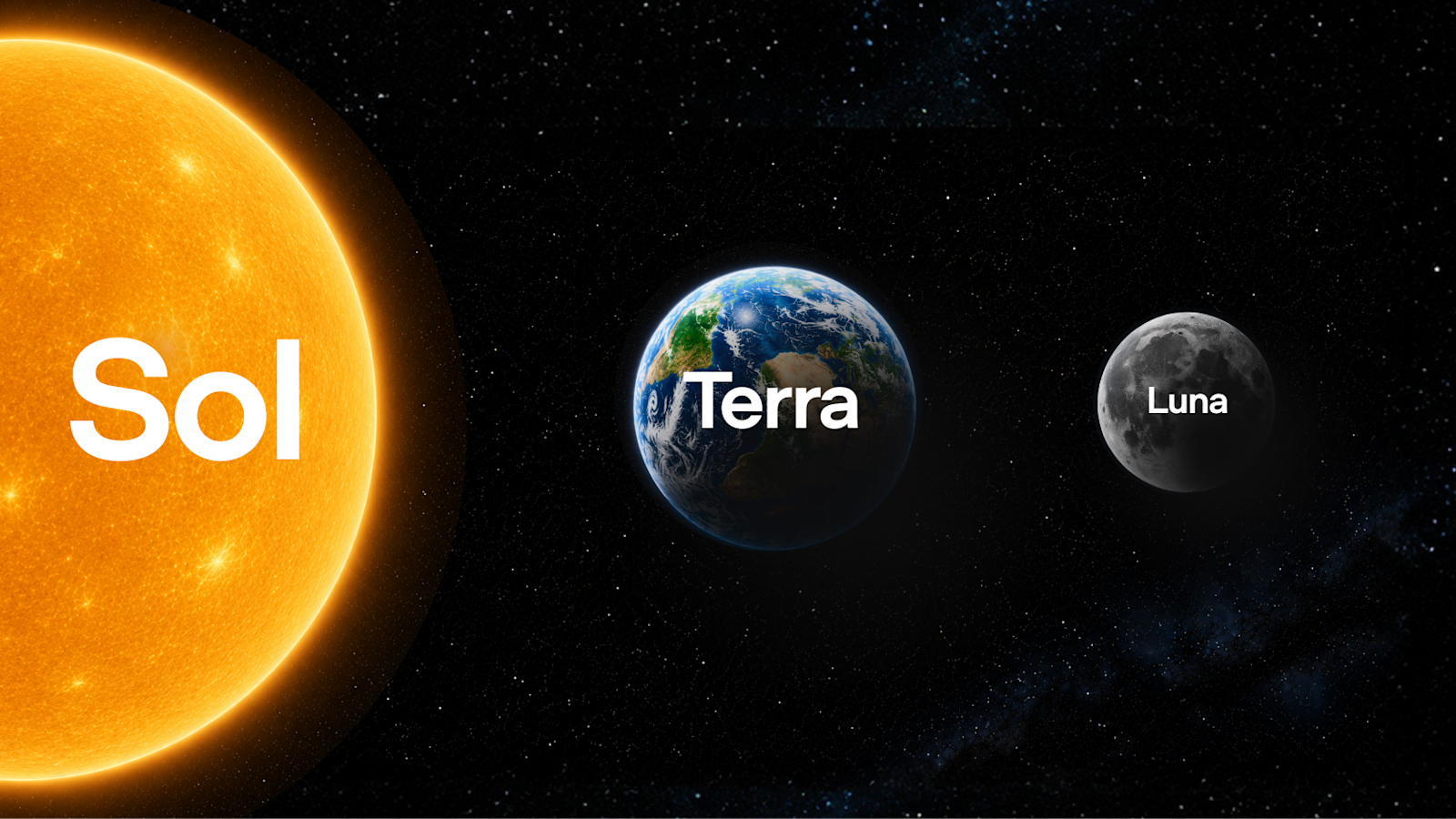
!GPT-5.6 Sol, Terra, and Luna preview from OpenAI
What is GPT-5.6?
GPT-5.6 is the latest generation in OpenAI's GPT line, following GPT-5.5. The headline change is structural. OpenAI introduced a new naming system with this release. The number (5.6) marks the generation. The names (Sol, Terra, Luna) mark durable capability tiers that trade off intelligence, speed, and cost. Each tier can advance on its own schedule in future releases, so "Terra" is meant to signal a consistent middle tier across generations rather than a one-off model.
That is a real shift from the older approach of stacking model names like 5.3, 5.4, and 5.5 and asking people to remember which was faster or cheaper. With GPT-5.6, the tier name tells you the tradeoff.
Sol, Terra, and Luna at a glance
- Sol is the flagship and OpenAI's most capable model to date. It targets the hardest work: long-horizon coding, scientific research, computer use, and cybersecurity.
- Terra is the balanced tier for everyday work. OpenAI says it performs competitively with GPT-5.5 while costing half as much.
- Luna is the fast, affordable tier. It brings strong capability at OpenAI's lowest price point, aimed at high-volume and latency-sensitive tasks.
Two new controls ship with the family. A max reasoning effort gives Sol the most time to think through a problem. A new ultra mode goes past a single agent by using subagents to break up and speed through complex work.
GPT-5.6 pricing
Pricing is set per 1 million tokens, split into input and output. Here is the full breakdown OpenAI published with the preview.
Model | Input (per 1M tokens) | Output (per 1M tokens) |
---|---|---|
Sol | $5.00 | $30.00 |
Terra | $2.50 | $15.00 |
Luna | $1.00 | $6.00 |
The number that matters for most teams is Terra at $2.50 input and $15 output. OpenAI says it matches GPT-5.5 on quality while costing half as much, which means anyone already running GPT-5.5 in production could cut model spend roughly in half once Terra is generally available, assuming the quality claim holds up in real use.
GPT-5.6 also changes how prompt caching is billed. It adds explicit cache breakpoints and a 30-minute minimum cache life, which makes caching behavior more predictable. Cache writes are billed at 1.25x the uncached input rate, and cache reads keep the 90% discount on input. For any workflow that reuses long system prompts or large context across calls (think repeated document analysis or agent loops), the caching changes can move your real cost more than the headline per-token price does.
Why GPT-5.6 launched as a limited preview
GPT-5.6 is not generally available yet. On launch day it went only to a small group of trusted partners and organizations, through the API and Codex. OpenAI's own help documentation put the initial count at around 20 organizations.
The reason is the cybersecurity capability jump, and the government process that now sits around it.
OpenAI says it previewed the models and its release plans with the U.S. government ahead of launch, and at the government's request started with a limited preview for partners whose participation was shared with officials. This follows an executive order President Trump signed on June 2, 2026, directing federal agencies to build a process for benchmarking and assessing the capabilities of new AI models.
OpenAI was direct about not loving the arrangement. In its announcement it wrote that it does not believe "this kind of government access process should become the long-term default," because it keeps the best tools from users, developers, enterprises, and cyber defenders who need them. The company framed the limited preview as a short-term step while it works with the administration on a repeatable release framework.
If this sounds familiar, it should. Two weeks earlier the same government process led Anthropic to pull its Mythos 5 and Fable 5 models offline under an export-control order. Then, on June 26, the administration cleared Anthropic to re-release Mythos 5 to roughly 100 vetted companies and agencies. Frontier model access is now something that can change by government decision, on short notice, for reasons tied to cyber and national security.
What GPT-5.6 is good at
OpenAI shared a set of benchmark results with the preview, with more promised at general availability. The early numbers point at three areas.
Coding
GPT-5.6 Sol set a new state of the art on Terminal-Bench 2.1, a test of command-line workflows that require planning, iteration, and tool coordination. In plain terms, it is better at multi-step technical work where the model has to use tools and adjust as it goes, not just write a single block of code.
Science
On GeneBench v1, which measures long genomics and quantitative-biology analyses, Sol scored higher than GPT-5.5 while using fewer tokens. Fewer tokens for a better result is the efficiency story OpenAI is telling across the whole family.
Cybersecurity
This is the capability that triggered the careful rollout. On ExploitBench, Sol was competitive with OpenAI's Mythos Preview model using only about a third of the output tokens. OpenAI says Sol is better at helping people find and fix vulnerabilities than at carrying out full end-to-end attacks, and that it does not cross the "Cyber Critical" threshold in the company's Preparedness Framework. Even so, OpenAI paired the release with its most extensive safeguards yet, including more than 700,000 A100-equivalent GPU hours of automated red-teaming to find jailbreaks before attackers do.
What GPT-5.6 means for marketing teams
Most marketing work does not need a frontier cyber model. So the practical read is less about Sol and more about cost and timing.
- Terra is the one to watch. If it really matches GPT-5.5 at half the price, the move for any team running content generation, classification, summarization, or agent workflows on GPT-5.5 is to test Terra the moment it is generally available and compare output quality side by side before switching.
- Luna changes the math on high-volume tasks. At $1 input and $6 output per million tokens, jobs you might have batched or rationed (tagging thousands of products, drafting large numbers of ad variations, parsing reviews) get cheaper to run at scale.
- Nothing is actionable today. The preview is partners-only through the API and Codex. There is no ChatGPT access for GPT-5.6 yet, and no firm general-availability date beyond "coming weeks." Plan for it, do not rebuild around it yet.
- Build for model swaps. The bigger lesson from both the GPT-5.6 preview and the Mythos 5 episode is that model availability is no longer a given. Any production workflow or client-facing tool should be able to switch models without a rewrite, and should have a fallback in case a model you depend on gets restricted.
One more detail worth noting: OpenAI said it will run GPT-5.6 Sol on Cerebras hardware at up to 750 tokens per second starting in July, initially for select customers. If that holds, it points at much faster responses for the flagship tier, which matters for any real-time or interactive use.
When will GPT-5.6 be available?
OpenAI has not given a hard date. The company said it plans to make Sol, Terra, and Luna generally available "in the coming weeks" across ChatGPT, Codex, and the API, and that broader access depends partly on the government review process it is working through. Until then, access is limited to the partner group named in the preview. We do not have a firm timeline yet and will update this when OpenAI publishes one.
Frequently asked questions
What is the difference between GPT-5.6 Sol, Terra, and Luna?
Sol is the flagship and most capable tier, aimed at the hardest coding, science, and security work. Terra is the balanced everyday tier that OpenAI says matches GPT-5.5 quality at half the cost. Luna is the fast, low-cost tier for high-volume and latency-sensitive tasks. The names are meant to be durable capability tiers that carry across future generations, so the number tells you the generation and the name tells you the tradeoff.
How much does GPT-5.6 cost?
Per 1 million tokens, Sol is $5 input and $30 output, Terra is $2.50 input and $15 output, and Luna is $1 input and $6 output. GPT-5.6 also adds more predictable prompt caching, with cache reads keeping a 90% input discount and cache writes billed at 1.25x the uncached input rate.
Is GPT-5.6 better than GPT-5.5?
On the benchmarks OpenAI shared, Sol beats GPT-5.5 on coding, biology, and cybersecurity tasks, often while using fewer tokens. Terra is positioned to match GPT-5.5 quality at half the price rather than beat it. OpenAI says it will publish a fuller set of evaluations at general availability, so the complete comparison is not out yet.
Can I use GPT-5.6 in ChatGPT right now?
No. As of the June 26, 2026 preview, GPT-5.6 is available only to a small group of trusted partners through the API and Codex. OpenAI says ChatGPT, Codex, and API access will open more broadly in the coming weeks.
Why was GPT-5.6 released to only a few partners?
OpenAI shared the models and its release plans with the U.S. government ahead of launch and, at the government's request, started with a limited preview. The restriction is tied to the model's stronger cybersecurity capabilities and a June 2, 2026 executive order directing federal agencies to assess new AI models before wide release. OpenAI has said it does not want this kind of government gating to become permanent.
What should marketers do about GPT-5.6 today?
Plan, do not rebuild. Note that Terra could roughly halve the model cost of anything you run on GPT-5.5, and set up a quick quality comparison to run the moment Terra is generally available. Make sure your production tools can swap models without a rewrite, since model access is now something that can change on short notice.
Bottom line
GPT-5.6 is a three-tier model family (Sol, Terra, and Luna) that OpenAI previewed on June 26, 2026 under a limited, partners-only release tied to a new government review process. For most marketing teams the story is cost and timing: Terra promises GPT-5.5 quality at half the price, Luna lowers the floor for high-volume work, and none of it is usable in ChatGPT yet. The smart move is to plan for the switch, keep your workflows model-agnostic, and test Terra against GPT-5.5 as soon as it opens up.
*Want help making your AI workflows model-agnostic so a single model change does not break your stack? Book a call with us.*
Related articles
- Claude Opus 5 Explained: What Anthropic's New Model Does, What It Costs, and When to Use It
- ChatGPT Ads Can Now Generate Your Ads: How the AI Ad Builder Works and How to Use It Safely
- AI-Generated Ads and the EU AI Act: What Advertisers Must Disclose Before August 2, 2026
- Claude Managed Agents, Self-Hosted Sandboxes, and MCP Tunnels: What Anthropic Just Shipped
- Gemini CLI Is Dead: What to Use Instead and How the Antigravity Transition Works
- What ChatGPT Ads Actually Cost in 2026, and Which Businesses Should Run a Pilot
- All Kanopy resources
- SEO & web services
- Paid ads services
- AI outreach services